Vogue
Saint Levant For Vogue
How we helped shape Saint Levant’s local artist identity.
At this stage in Saint Levant’s career, his connection to his Arab roots was becoming an increasingly important part of his artistic identity, but the visual language around it was still open.
For a Vogue press shoot in Cairo, we saw an opportunity to explore what this new chapter could look like through a distinctly local lens.
Rather than approaching “Arab identity” through obvious cultural symbols, we wanted to find something more lived in, contemporary, and rooted in the streets.
The question became: What does Saint Levant look like when he belongs to the region?
Insight
We leaned into the idea of the Sha3by lover boy: a character that felt romantic and slightly rebellious, deeply connected to the visual culture of Cairo without becoming a costume version of it.
Saint Levant’s music already carried a tension between romance, masculinity, Arab identity, and rebellion. We wanted the shoot to bring those qualities together through a character that felt familiar: the local heartthrob, the neighborhood romantic, the guy who could be equally at home writing love songs or standing on the corner with his friends.
Instead of recreating a generic “Arab aesthetic,” we looked at the visual language of the city itself: its streets, characters, textures, architecture, and everyday energy.
Execution
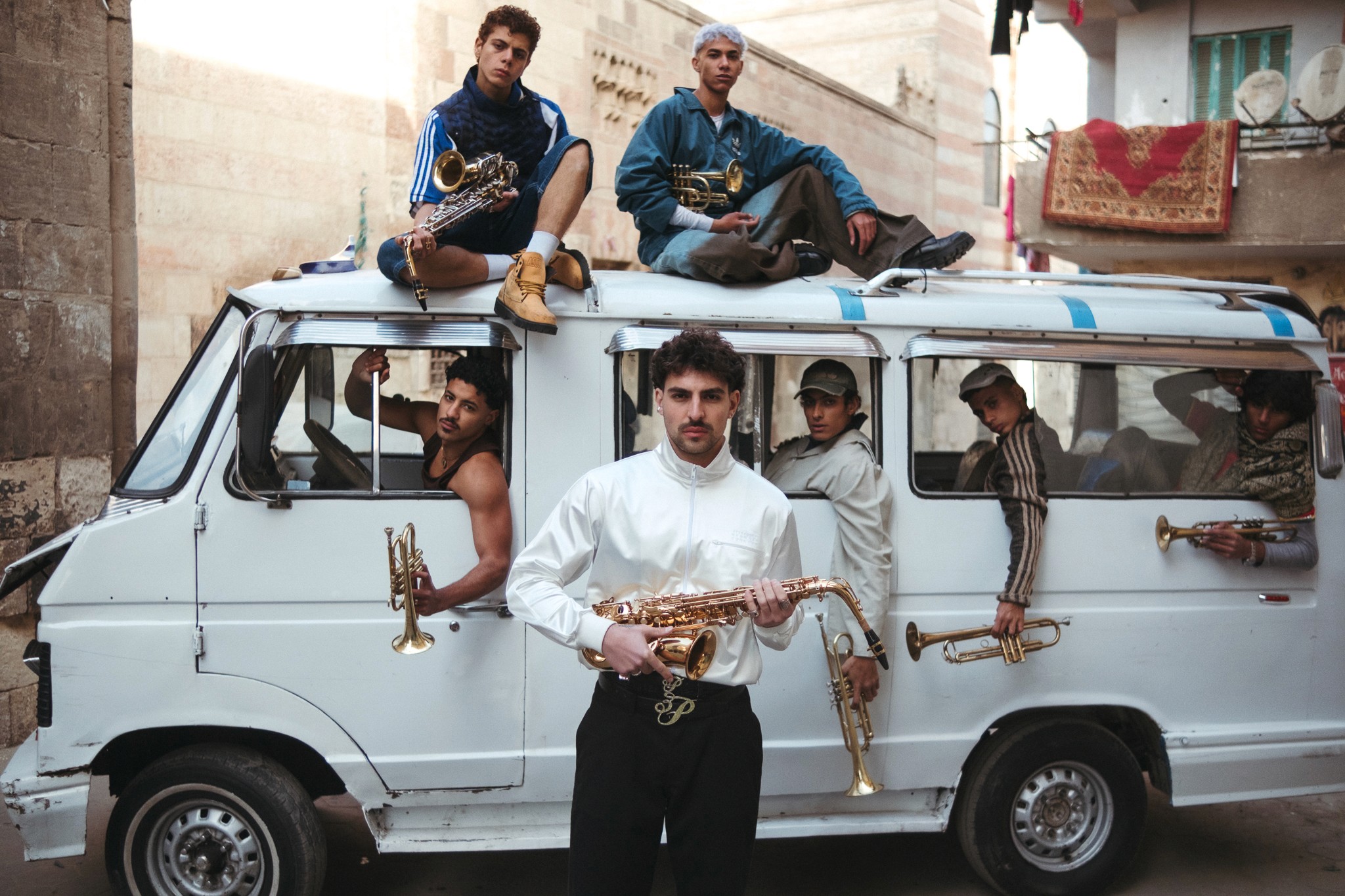
We took over an entire alleyway in historic Cairo and transformed it around the concept.
Rather than treating the location as a backdrop, we reworked the space to create our own version of the neighborhood through controlling the art direction, dressing the environment, and introducing characters that made the street feel like part of Saint Levant’s world.
The styling followed the same idea.
Saint Levant became the Sha3by lover boy: romantic, confident, slightly dangerous, but clearly local.
Then we introduced a group of teenagers carrying trumpets like weapons. The image was deliberately absurd at first glance, but the metaphor was simple: he fights with his music. The trumpets became an unexpected substitute for guns, turning the familiar visual language of street conflict into something musical.
The teenagers also gave the images a sense of neighborhood mythology, making Saint Levant feel less like an artist visiting a local neighborhood and more like a character emerging from it.
Result
The shoot became an early exploration of what Saint Levant could look like as a local artist, rather than simply an artist with Arab heritage.
By grounding the work in Cairo’s streets and translating his musical identity into a distinctly local visual language, we helped push his image toward something more culturally specific, playful, and recognizable.
This shoot helped Saint Levant in opening up a visual direction for it to grow into.